Quieting the Noise: Ways to Calm a Busy Mind
Modern life is loud — not always in obvious ways, but in the steady accumulation of thoughts, decisions, notifications, and emotional input that never fully turns off. Even in a quiet room, the mind can feel crowded.
For many adults, especially in midlife, this internal noise becomes more noticeable. Responsibilities layer on. Sensitivities change. The nervous system asks — sometimes firmly — for a slower pace, fewer inputs, and more intentional rest.
Quieting the noise doesn’t require drastic lifestyle changes or rigid routines. Often, it begins with small, gentle shifts that signal safety and calm to the body and mind. This post explores what “noise” really means, why it feels so persistent, and how simple, supportive practices at home can help soften it.

What “Noise” Really Is (and Why It’s So Tiring)
When we talk about noise, we’re not only referring to sound. Mental and emotional noise can include:
- Racing or looping thoughts
- Background worry or anticipation
- Sensory overload (light, clutter, scent, sound)
- Emotional residue from conversations or responsibilities
- The pressure to stay productive or “on”
Unlike external sound, this type of noise doesn’t turn off when the room goes quiet. The brain remains alert, scanning for what’s next. Over time, this constant low-level activation can lead to fatigue, irritability, difficulty sleeping, or a sense of never fully resting — even during downtime.
The goal isn’t to silence the mind completely. That’s unrealistic and unnecessary. Instead, the aim is to reduce excess input and create conditions where the nervous system can soften. Read more about Stress symptoms and causes here.
Why Home Matters So Much for Mental Calm
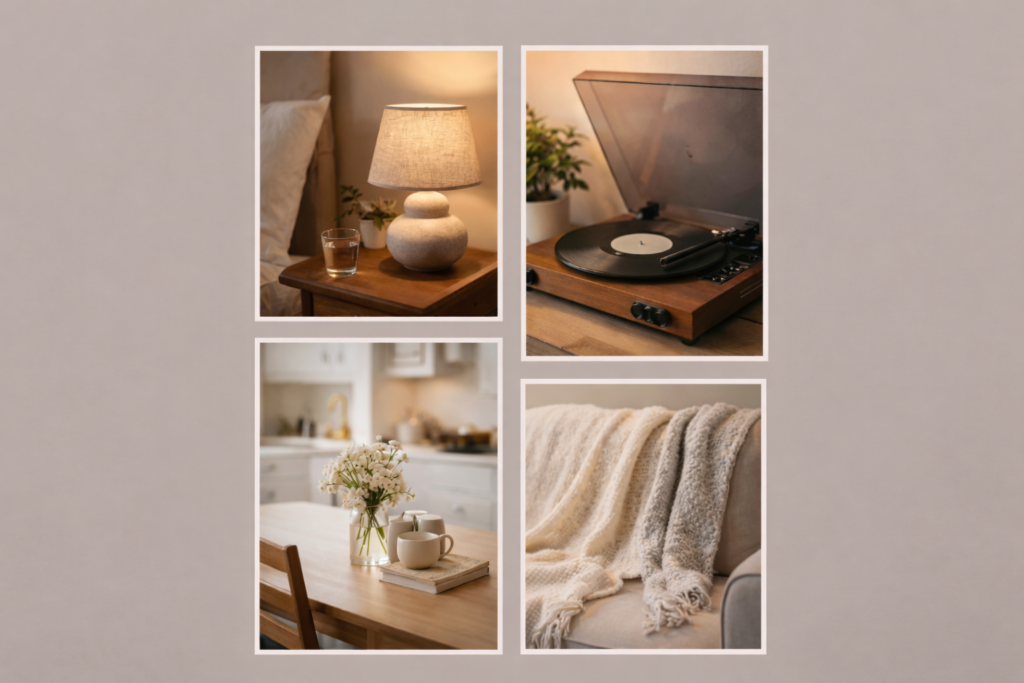
Home is more than a physical space — it’s where the body decides whether it’s safe to rest. Subtle environmental cues play a major role in this decision.
Things like lighting, texture, scent, sound, and visual clutter all send messages to the nervous system. When these cues feel gentle and consistent, the body doesn’t have to stay on alert.
A calm home doesn’t need to be minimalist or perfectly styled. It needs to feel supportive, familiar, and intentionally paced.
Gentle, Practical Ways to Quiet the Noise
Below are simple, low-pressure practices that can help reduce mental noise over time. None of them require perfection or daily adherence — they work best when approached as invitations rather than obligations.
1. Lower Sensory Input in Small Ways
Noise often increases when the senses are overwhelmed. Choose one sense at a time to soften:
- Light: Use warm bulbs or lamps instead of overhead lighting in the evening
- Sound: Reduce background noise when possible; allow quiet or soft instrumental music
- Visuals: Clear one small surface rather than an entire room
- Touch: Introduce comforting textures like cotton throws or worn-in linens
Small adjustments can have an outsized calming effect.
2. Create a Consistent Evening Cue
The nervous system responds well to repetition. A simple, repeated cue can signal that it’s safe to slow down.
This might be:
- Making tea at the same time each evening
- Sitting in the same chair for a few minutes of stillness
- Lighting a candle as a transition into rest
- Washing hands or face with warm water intentionally
Consistency matters more than duration.

3. Use Scent as an Anchor
Scent is processed directly by the brain’s emotional centers, making it a powerful tool for calming mental noise.
Soft, familiar fragrances — especially those associated with comfort and warmth — can gently ground attention in the present moment. Over time, the brain begins to associate that scent with slowing down.
This is where products like Quiet the Noise are designed to function — not as a fix, but as a sensory companion. When used regularly in calm moments, scent becomes a signal rather than a solution.
4. Let Stillness Be Short (and That’s Okay)
One common reason people avoid quiet is the fear that stillness will make thoughts louder. This is understandable — and it doesn’t mean stillness isn’t working.
Start with:
- One or two minutes of sitting
- Hands resting, eyes soft
- No expectation to “clear” the mind
The practice isn’t about eliminating thoughts. It’s about allowing them to pass without engaging every one.
5. Replace Productivity with Presence
Many adults struggle to rest because rest feels unproductive. Quiet moments can feel undeserved or uncomfortable.
Try reframing:
- Rest is nervous system maintenance
- Calm supports clarity
- Presence is not wasted time
Even brief pauses support long-term emotional resilience.
A Gentle Ritual for Quieting the Noise
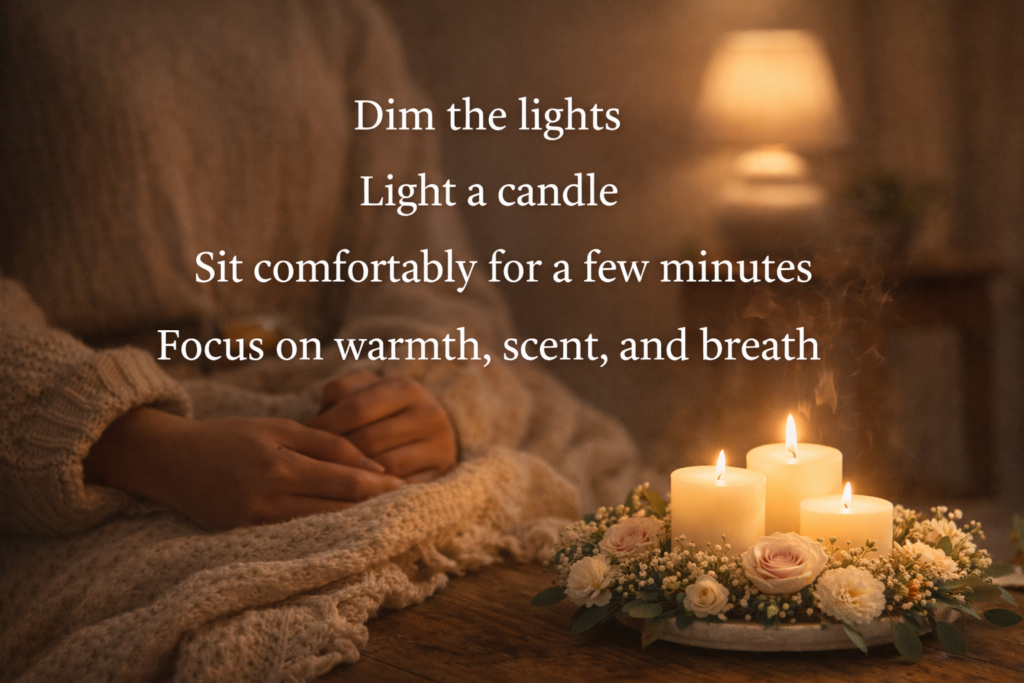
Rituals work because they combine repetition, sensory cues, and intention — without requiring effort or outcome.
A simple example:
- Dim the lights
- Light a candle
- Sit comfortably for a few minutes
- Focus on warmth, scent, and breath
This kind of ritual doesn’t demand anything from you. It simply creates space.
Products created for Comfy Cozy Home, including a free journal kit called Quiet Moments in the resources, are meant to fit into these moments — not to lead them, rush them, or promise transformation. They exist to support a pace you choose.
When the Noise Doesn’t Fully Go Away
It’s important to say this gently and honestly: some noise is part of being human. Life brings seasons of busyness, emotion, and complexity.
Quieting the noise isn’t about achieving constant calm. It’s about:
- Giving the nervous system regular breaks
- Reducing unnecessary stimulation
- Creating moments of ease within ordinary days
Even partial quiet counts.
Closing Thoughts
Calm doesn’t need to be earned. It doesn’t require a perfect home, a strict routine, or a quieter life. Often, it grows from small, intentional moments that tell the body: you’re safe right now.
Whether it’s through lighting a candle, softening your space, or simply allowing yourself to pause, quiet can be invited — gently, patiently, and on your own terms.