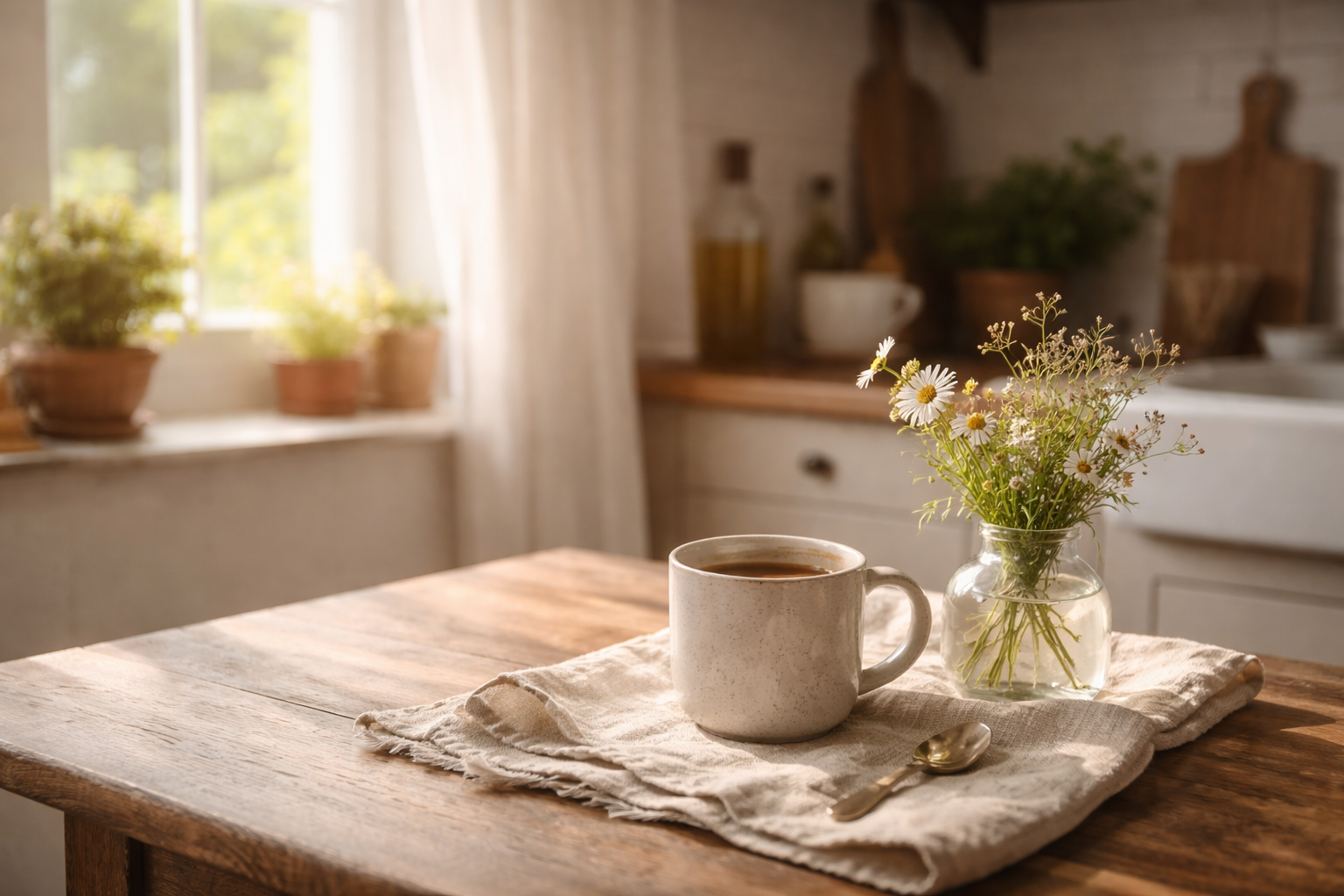
The Forgotten Art of Enjoying Life
A Comfy Cozy Home — Savor Pillar Article
Modern life has a strange way of convincing us that enjoyment is something we earn later.
Later—after the work is done.
Later—after the house is clean.
Later—after the responsibilities are handled.
Later—when we finally have time.
But that “later” rarely arrives.
Instead, days pass quietly. Weeks blur together. Months slip by in routines filled with obligations and tasks. Somewhere along the way, the simple act of enjoying life gets postponed again and again.
Many adults eventually wake up to a subtle but unsettling realization:
Life isn’t necessarily bad… but it also doesn’t feel very lived.
This is where the gentle practice of savoring becomes important.
Savoring is not about dramatic changes or extravagant moments. It is about rediscovering how to notice the life that is already happening around you. The warmth of morning light through the kitchen window. The smell of fresh coffee. The sound of rain against the roof in the evening.
These small experiences are easy to overlook—but they are often where the richest parts of life quietly live.
Learning to enjoy them again is a forgotten art.

Why So Many of Us Stop Enjoying Life
Most people don’t stop savoring life intentionally. It happens slowly and quietly.
Responsibilities increase. Schedules fill up. The pace of the world accelerates. Technology brings constant notifications, news updates, and reminders of what we should be doing next.
Eventually, many people slip into a mode of functional living—moving from task to task without ever fully inhabiting the moments in between.
Researchers studying happiness have found that people who consciously notice positive experiences tend to report greater overall well-being. The Greater Good Science Center at UC Berkeley explains that savoring positive moments strengthens emotional resilience and increases life satisfaction.
In other words, joy is not just something that happens to us.
It is also something we practice noticing.
Unfortunately, the habit of noticing takes patience—and patience is something our culture rarely encourages.
We are taught to move faster, accomplish more, and constantly optimize our lives. Enjoyment can start to feel unproductive, even indulgent.
But the truth is far simpler:
Enjoying life is not wasted time. It is the reason for time.
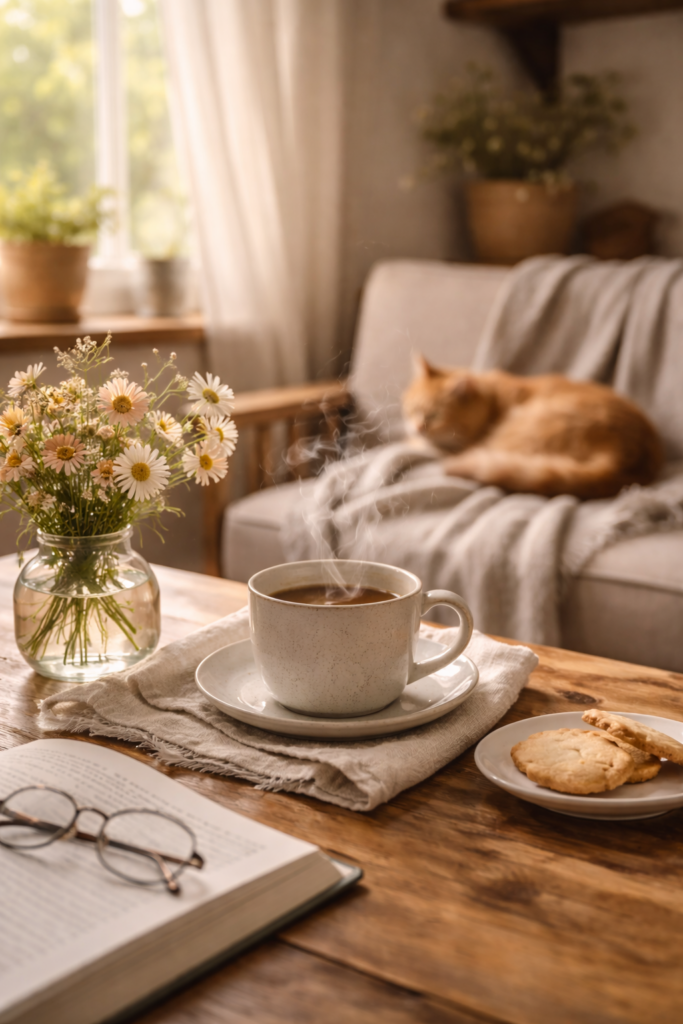
The Small Joys We Rush Past
Think about your morning routine.
How often do you move through it on autopilot?
Coffee brewed while checking email.
Breakfast eaten while scrolling the phone.
Sunlight shining through the window—unnoticed.
These moments may seem small, but they form the texture of daily life.
Psychologists often refer to these as “micro-moments of joy.” When noticed intentionally, they can accumulate into a deep sense of contentment.
Harvard Health Publishing notes that practicing gratitude and mindful awareness of daily pleasures can significantly improve emotional health and reduce stress.
The key word here is notice.
Because the moments are already happening.
A quiet cup of coffee.
A favorite song playing in the car.
The way the house settles in the evening after a long day.
None of these are extraordinary events. But they are deeply felt experiences.
And when we slow down enough to feel them, life begins to feel fuller again.
The Difference Between Pleasure and Savoring
There is an important difference between pleasure and savoring.
Pleasure is the experience itself.
Savoring is the act of fully noticing and appreciating that experience.
You can hurriedly drink a cup of coffee without savoring it.
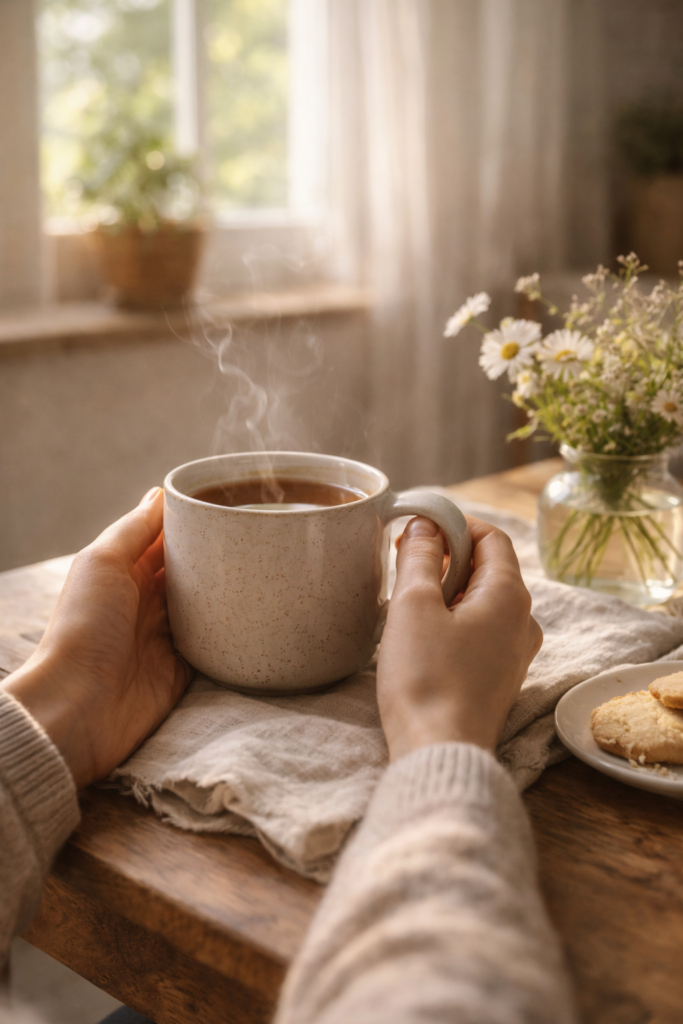
Or you can pause, wrap both hands around the mug, inhale the warmth, and take a slow sip while watching the morning light fill the room.
The coffee is the same.
But the experience is completely different.
Savoring stretches a moment. It deepens it. It turns something ordinary into something meaningful.
This is one of the reasons simple rituals are so powerful—they create intentional space for savoring.
Why Slowing Down Feels So Difficult
Many people feel uneasy when they first try to slow down.
The mind may start racing. A sense of guilt may appear. There may be a subtle voice saying:
“You should be doing something more productive.”
That voice is not a personal failure. It is simply the result of living in a culture that celebrates busyness.
But rest, enjoyment, and presence are not luxuries.
They are basic emotional nutrients.
The nervous system needs periods of calm to recover from stress. Quiet moments allow the brain to process emotions and restore focus.
Organizations like the American Psychological Association note that chronic stress without recovery time can significantly impact both physical and mental health.
This is why savoring matters.
It gives the mind and body small islands of restoration throughout the day.
How to Begin Enjoying Life Again
The beautiful thing about savoring is that it does not require dramatic change.
You do not need a vacation.
You do not need a new lifestyle.
You do not need more time.
You simply need to begin noticing.
Here are a few gentle ways to start:
Notice sensory moments
Pause briefly during the day and pay attention to one sense—what you see, hear, smell, or feel.
Slow down one routine
Choose one daily activity—morning coffee, watering plants, washing dishes—and do it slowly and intentionally.
Let moments linger
When something pleasant happens, allow yourself a few extra seconds to experience it fully.
Reduce multitasking
Enjoyment disappears when attention is split in five directions.
None of these changes are dramatic.
But over time they reshape how life feels.
The Ritual of the Favorite Mug
One simple savoring ritual that many readers enjoy is The Favorite Mug Ritual.
This ritual is part of the Comfy Cozy Home ritual library, designed to help people slow down and reconnect with small daily pleasures.
The practice is beautifully simple.
Choose a mug that feels comforting or meaningful—perhaps one with a memory attached to it. Fill it with coffee, tea, or another warm drink. Then sit somewhere quiet and take a few minutes to enjoy it without multitasking.
Notice the warmth of the mug in your hands. The aroma rising from the drink. The way the first sip feels.
This small pause may only last five minutes, but it gently shifts your nervous system out of rush mode and into presence. Over time, rituals like this can help retrain the mind to notice calm, comfort, and everyday joy.
Sometimes the smallest rituals become the most restorative.
Creating a Life You Actually Experience
Many people spend years trying to build a good life.
But a good life is not only something we create.
It is something we experience.
And experience requires attention.
The truth is, many of the most meaningful parts of life are quiet:
Morning sunlight across the floor.
A peaceful moment in the garden.
The familiar comfort of your own home at the end of the day.
These moments rarely appear on social media highlight reels. They do not look impressive from the outside.
But they are the moments that shape how life actually feels.
Savoring allows those moments to matter again.
The Gentle Reminder We All Need
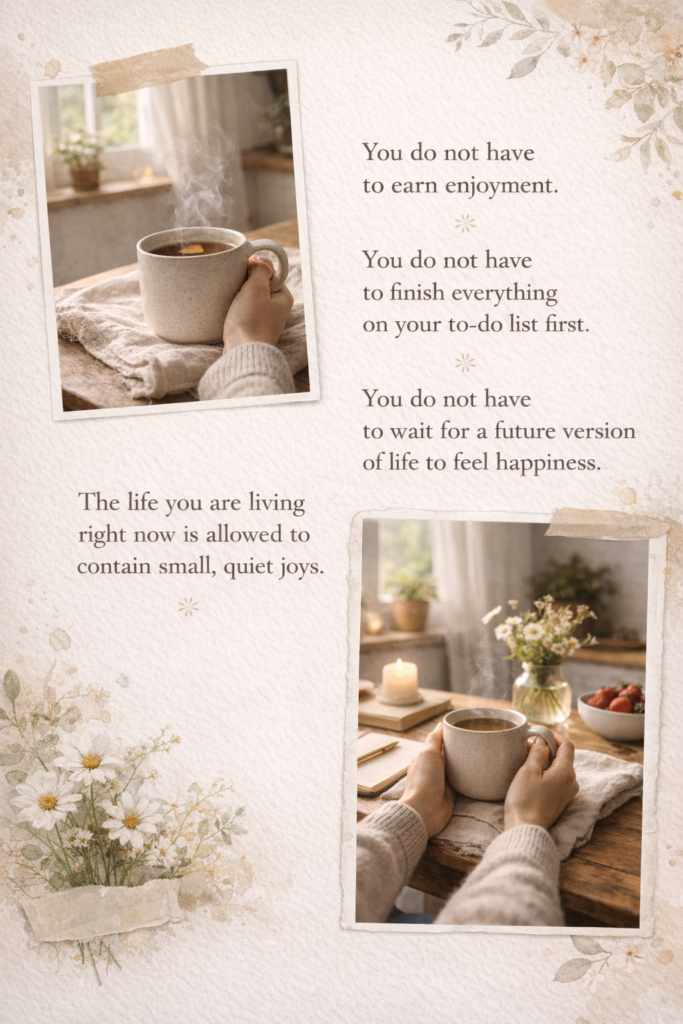
You do not have to earn enjoyment.
You do not have to finish everything on your to-do list first.
And you do not have to wait for a future version of life to feel happiness.
The life you are living right now is allowed to contain small, quiet joys.
A slow cup of tea.
A candle lit in the evening.
A favorite chair by the window.
These are not distractions from life.
They are life.
And sometimes, the most meaningful thing we can do is simply pause long enough to enjoy them.